Why I think it's still worth learning JavaScript (and coding in general) in the vibe coding era
Competency generates leverage.

I have AI write code for me on the regular. For example:
- PHP functions to help me accomplish more advanced layouts in WordPress
- Python scripts for various purposes, like iterating through a bunch of JSON files in folders and writing the data to a CSV
- JavaScript code to enhance website interactions and to create new functionality in Google Apps Script
The outputs I get tend to be pretty good on the whole, and I'm generally able to get what I want with a few prompts. These tools produce code much faster than I ever could—even if I could type at stenographer speed. But I still think it's worth learning to code—even in the vibe code era. Here are six reasons why I'm learning JavaScript in 2026:
Understanding the underlying structure is key
I want to understand how the language works. Understanding the syntax makes it possible to understand how the code fits into the larger picture and how to maintain that code if needed. I don't want to be comfortable with just blindly copying/pasting things from across the internet without having even a modicum of understanding into how the code works. I like this quote from Julia Evans:
I have one main opinion about programming, which is that deeply understanding the underlying systems you use (the browser, the kernel, the operating system, the network layers, your database, HTTP, whatever you’re running on top of) is essential if you want to do technically innovative work and be able to solve hard problems.
The deeper you go, the more options it opens for you to solve problems.
Web technologies don't change that fast
AI is an incredible tool, but the fundamental tech stack of the web (HTML, CSS, JavaScript) has been around for a long time. Languages evolve and new frameworks emerge all the time, but the base remains the same. DHH says it best (the whole post is worth reading):
All the energy I've invested into learning Ruby, SQL, HTTP, HTML, CSS, JavaScript, Linux, and the other mainstays of web development, continues to propel my work to this day. Yes, the versions have changed, the specs have grown more complicated, and most of the fundamentals have gotten slowly better. But it's completely recognizable from twenty years ago.
...
Perhaps the best piece of advice I ever got from Jeff Bezos was this: Invest in things that don't change. His example was that customers won't wake up one day and wish shipping was slower or the selection of goods poorer. So investing in logistics and warehousing was investing in things that don't change, and will continue to pay dividends for decades.
I've been investing in things that don't change for two decades. We've been doing the same at 37signals. It's rarely spectacular in the first moment, or the next, but the magic of compound interest applies to skills as well as to investments. If you can keep your cool, and not thrash about reacting to every dip or peak, you usually make out pretty well in the end.
Learning to code now provides the mental bridge between the web of yesterday and the web of the future.
There's still lots of code that's available for copy/paste/modification
Even with AI, there are still lots of code out there in the wild that's available for a simple copy/paste across GitHub, Stack Overflow, and elsewhere. Those are the things that show up in a Google search or a random blog post that can possibly pull a project out of the fire. If you know the syntax, you can actually apply that code thoughtfully without just blindly copying/pasting.
AI can understand the target, but not the intent
In my experience, when you give AI a prompt, it understands the general direction to go in, but it's never going to get down to the minutia of what you're really trying to accomplish. I've found that AI tends to give me an 80–90% result, and it can be hard for me to tweak the output to get to 100% when I can't read the language. As the human in the loop, I need to know the language to ensure the output matches intent.
Knowing the language helps you write better prompts
The prompt is the most essential input for the AI. Prompts work best when they are clear and specific. When you know how a language works, you can be more specific with your prompts and get to a better, more polished result faster.
Building a stronger T-shaped skill set
People with a T-shaped skill set have deep competency in one area, and broad competency in a bunch of other, related areas. In his talk "How To Defend Your Marketing Career in the AI Era" at Ahrefs Evolve 2025, Ryan Law said:
The T-shaped marketer is the idea that great marketers tend to have deep expertise in one core area and then they have a series of kind of superficial related skills. You don't need much competence in them, but just a little bit is enough to make all of your work much more successful. Deep expertise is something that’s actually very hard for AI to help you acquire—it's hard to do. So many years of research and nuance and context go into that. But AI is very very good for helping you acquire superficial competence in these broad skills. It’s amazing for getting to kind of 20% competency in whatever area you're interested in.
At this point in my career, I don't expect to become as proficient in JavaScript as I am in writing or project management. I've put so many hours into those disciplines that it's hard for anything else to catch up. But if I can gain a new skill that gives me new leverage in my day to day work, that is indeed a win with compounding interest.
How I'm learning JavaScript
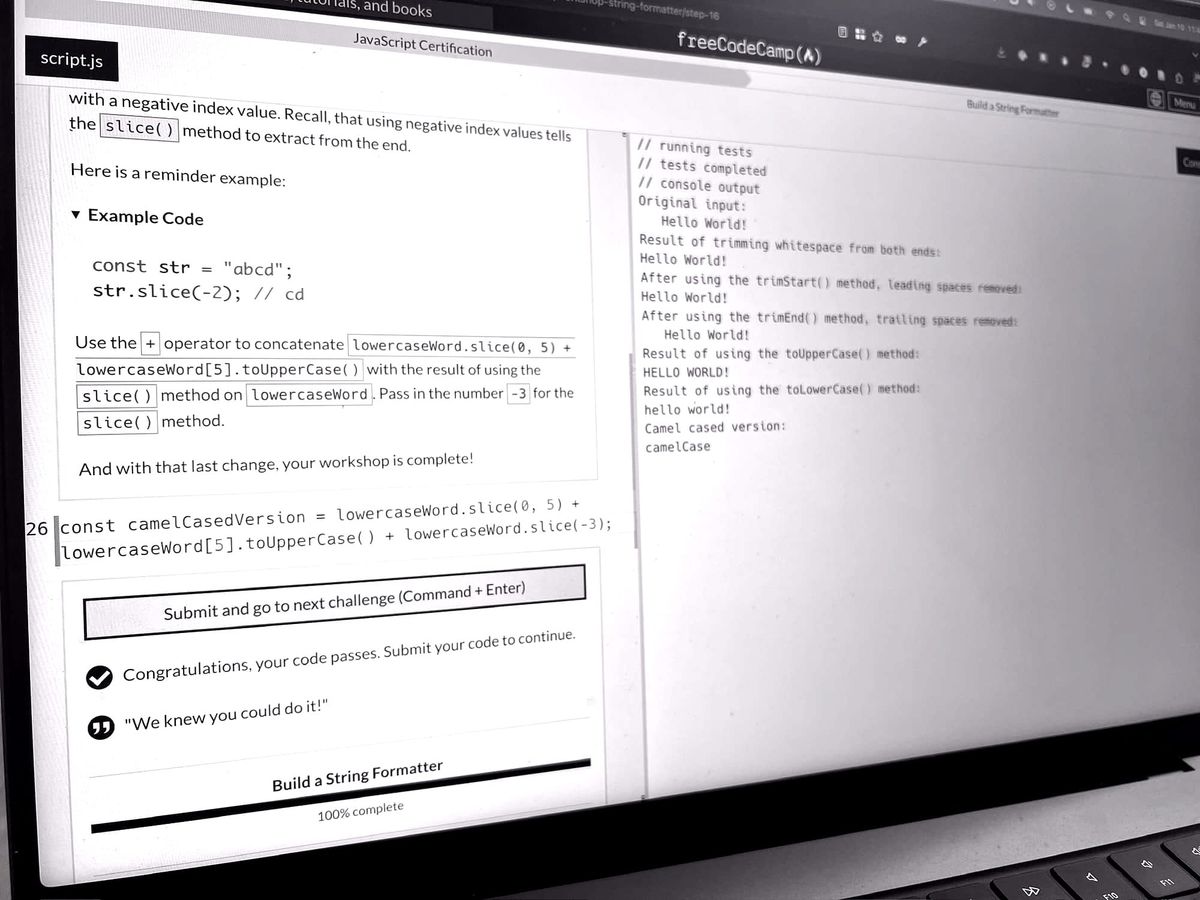
Over the years, I really appreciated the tutorials and resources from freeCodeCamp. All of the time I've invested into their content (e.g., learning about HTML, CSS, and SQL) has paid off massively in my professional work, and the best part is that it's FREE (it's in the name after all).
This year, I'm working through their JavaScript Certification so I can actually read the code snippets that I have to drop into web builds from time to time. I'd also like to have the ability to do some more in Google Apps Script.
The things I enjoy about the freeCodeCamp certifications is that they:
- remove all the complexity of having to set up an IDE to get started with the language—all of the work is done in the browser
- The lessons are step-by-step and very interactive—you get instant feedback as you work
- There is no predictive typing or error highlighting, so you actually get good at spotting misplaced quotes and semicolons
The bar I've set for investment is pretty low: My goal is to do just 10–30 minutes of work a day, six days a week. It's easy to blow 10 minutes just scrolling mindlessly on social media. I'd rather put that time to good use by learning and improving my skills.
I'm just a week in, but even in this week, I can feel the syntax becoming clearer, and can actually look at JavaScript code and understand which variables are being assigned and get a general sense of how the code flows.
And at the end of the day, I find that growing in competency and learning how something works to be way more exciting than having AI just do it for me.